Was Jimmy Gracey drugged? University of Alabama student’s body discovered, but mystery deepens
Was Jimmy Gracey Drugged? University of Alabama Student’s Death in Barcelona Leaves Family Searching for Answers
For several days, the disappearance of University of Alabama student James “Jimmy” Gracey played out like every family’s worst nightmare: a missed return home, a last sighting near a waterfront nightclub, a frantic search in a foreign city, and then the devastating confirmation no one wanted to hear. Gracey, 20, was found dead off the coast of Barcelona after vanishing during a spring break trip, and while Spanish police have said their initial view is that the death was likely accidental, the unanswered questions surrounding his final hours have only deepened the mystery.
At the center of that uncertainty is one question that has rapidly gripped public attention: was Jimmy Gracey drugged before he entered the water?
So far, there is no public evidence proving that he was. Authorities have not publicly announced toxicology findings, and an autopsy was still pending in the latest confirmed reports. But the question continues to hang over the case because of the limited public detail about what happened between Gracey’s last known moments outside Barcelona’s Shôko nightclub and the discovery of his body near Somorrostro Beach.
That gap in the timeline is where rumor, fear, and grief now collide.
A spring break trip that turned tragic
Jimmy Gracey was not described by loved ones as reckless or unpredictable. Family members said his disappearance was completely out of character, portraying him as a responsible, caring young man who had traveled to Barcelona during spring break to visit friends studying abroad. According to published reports, Gracey had been with friends at the beachfront club before the group became separated. He was last seen around 3 a.m. on March 17. When he failed to return to the Airbnb where he was staying, alarm quickly spread among those who knew him.
In the beginning, the case carried the terrifying uncertainty that defines so many missing-person investigations overseas. His mother issued a public plea. His family shared identifying details, including what he was wearing. Police reportedly came into possession of his phone, though early accounts did not make clear exactly how that happened. Then came another detail that intensified concern: reports that Gracey’s wallet had been found in the sea near the area where he was last seen.
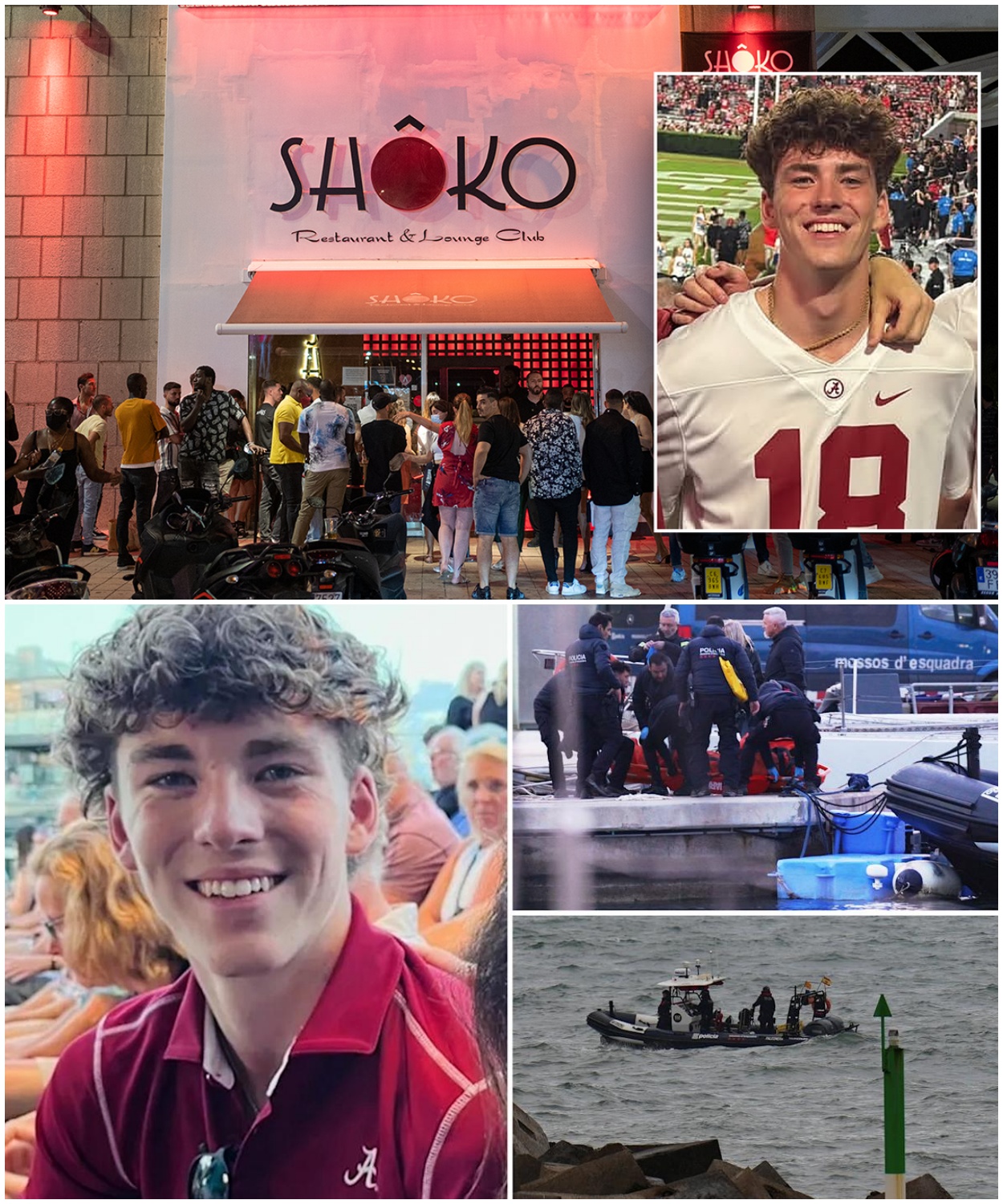
By the time authorities found his body in waters near the beach, the hope that had fueled the search had given way to a different and more painful reality. The investigation did not end with that discovery. In some ways, it only became more emotionally charged. Spanish authorities said early findings pointed toward an accidental death, but they also made clear that the formal cause of death would depend on the autopsy.
That distinction matters.
Because “likely accidental” is not the same as “fully explained.”
Why the drugging question refuses to go away
The theory that Gracey may have been drugged appears to stem not from an official public conclusion, but from reporting that authorities had not ruled the possibility out. Fox News, citing a Barcelona law enforcement source, reported that investigators had not excluded the possibility that Gracey was drugged before entering the water, even though the death was still primarily believed to be accidental. The same reporting said his wallet had been recovered intact, with cash, identification, and cards still inside.
That detail about the wallet is striking for a reason. When valuables remain untouched, it can complicate simplistic assumptions about robbery or a conventional theft-driven assault. It does not prove foul play. But it can push both investigators and the public toward harder questions. If there was no obvious theft motive, what exactly happened in the hours before Gracey ended up in the water?
The possibility of drugging also resonates because nightlife districts in major tourist cities often generate wider fears about drink tampering, opportunistic crime, and vulnerable travelers becoming isolated after late nights out. But broad concerns are not evidence in a specific case, and that is where responsible reporting must draw a clear line. There is, at this stage, no confirmed toxicology report in the public record establishing that Gracey was drugged. There is only an unresolved question, amplified by the lack of complete answers and by the enormous emotional vacuum that follows a sudden death far from home.
In that vacuum, every missing piece becomes loaded with meaning.
A phone recovered before his body was found.
A wallet reportedly floating in the sea.
Surveillance footage that, according to reports, showed him walking alone toward the docks or leaving the area of the club before he fell into the water.
And an “unidentified person” mentioned in some early coverage, without enough public detail to explain whether that person was relevant to the final outcome or merely part of the wider review of footage.
Those fragments do not yet form a full story. They form a haunting outline.
The timeline that still feels unfinished
The publicly reported sequence of events is relatively brief, but every minute inside it now matters.
Gracey was on a spring break trip in Barcelona. He visited Shôko, a well-known beachfront venue, with friends. At some point in the early morning hours, he became separated from the group. Reports place his last known sighting around 3 a.m. Family members later said he did not return to his lodging. Authorities became involved. Searches were carried out in and around the beach and Port Olímpic area. His body was ultimately recovered near the waters off Somorrostro Beach.
That summary sounds straightforward on paper.
In real life, it is anything but.
Between leaving friends and being found dead, Gracey crossed into a period that remains largely opaque to the public. Did he accidentally wander toward the water while disoriented? Did he slip and fall? Was he impaired in some way that investigators still cannot publicly explain? Was there interaction with other people that mattered? Those are the kinds of questions that arise not because there is proof of criminal conduct, but because uncertainty itself becomes the story when a young person dies abruptly under circumstances that resist easy explanation.
Spanish police have reportedly reviewed surveillance footage. According to People, video showed Gracey walking alone toward the docks before falling into the water, though the exact location and circumstances remained unclear. If that account holds, it may support the accidental-drowning theory. Yet even that would not automatically settle the deeper question haunting his family and the public: why did he end up alone, vulnerable, and on a path toward danger in the first place?
That is why toxicology matters so much.
It may not answer everything, but it could answer one of the most important things.
Was Jimmy Gracey fully in control of himself during those final moments?
An accidental death can still contain unanswered truths
One of the most misunderstood realities in cases like this is that an accidental death and a deeply troubling set of circumstances can both be true at the same time.
Investigators may eventually conclude that Gracey drowned accidentally. That would address the immediate medical cause of death. But it would not necessarily explain whether his condition before entering the water was shaped by alcohol, an unknown substance, exhaustion, confusion, separation from friends, or another factor that has not yet been publicly identified.
That distinction is critical for families.
When a loved one dies in a way authorities describe as accidental, the public sometimes hears that as the end of the story. For families, it can feel like the beginning of a different kind of torment. If there was no criminal attack, why did the tragedy happen? If the victim was alone, how alone were they? If there was no theft, what explains the chain of events? If an autopsy confirms drowning, what caused the vulnerability that led to the drowning?
Those are not legal technicalities.
They are the questions grieving families live with.
Gracey’s relatives have already signaled that they are waiting for answers about what happened. Their public statements have reflected heartbreak, gratitude, and the desire for privacy as they navigate a loss that became public before it could even fully become personal. The University of Alabama and Gracey’s fraternity, Theta Chi, also issued statements mourning him and emphasizing the impact of his death on the campus community.
That reaction says something powerful about the scope of this story.
It is no longer just about a missing student in Barcelona.
It is about the terrible speed with which ordinary joy can become irreversible loss.
Barcelona, tourism, and the vulnerability of being far from home
Barcelona is one of Europe’s most visited destinations, known for its beaches, nightlife, and heavy flow of international travelers. That popularity is part of what makes cases like Gracey’s so unsettling. Tourist cities are built on movement, distraction, and the illusion that a crowded place is automatically a safe place. But crowds can also obscure danger. They can make it easier for people to become separated, harder for witnesses to remember details, and more difficult for families thousands of miles away to piece together what happened in the crucial early hours of an emergency.
When a student goes missing abroad, every ordinary challenge of an investigation becomes more complicated. There are language barriers, jurisdictional issues, time differences, and the emotional distance of trying to manage crisis from another country. Family members often rely on consular support, local police, media attention, and public appeals all at once. In Gracey’s case, the U.S. State Department was reported to be involved in offering assistance to the family while local authorities led the investigation.
That transatlantic scramble adds another layer to why this case hit such a nerve in the United States. It was not only tragic. It was relatable in a particularly modern way. A college student went abroad for spring break, like so many do. He went out at night in a major international city, like so many do. He became separated from friends for what may have seemed like a short time, and then he never came back.
The normalcy of those early steps is exactly what makes the ending so devastating.
The role of surveillance, evidence, and toxicology
In many overseas death investigations involving nightlife districts, surveillance footage becomes the first major tool for establishing movement and narrowing uncertainty. In Gracey’s case, multiple reports indicate that authorities reviewed or relied on video from the area near the nightclub and waterfront. That footage appears central to the current theory that the death was accidental.
But video can only do so much.
It can show direction, timing, and visible behavior.
It often cannot answer whether someone was drugged, severely intoxicated, exhausted, confused, or in distress.
That is why autopsy and toxicology results are likely to be the most important next development in the case. If toxicology identifies no unusual substances, the accidental-drowning explanation may become much clearer, though questions about how he became isolated could still remain. If toxicology does detect something suspicious, the case could shift in a more alarming direction, raising questions about whether he was incapacitated before entering the water. At the moment, however, the public simply does not know.
This is the uncomfortable territory where many modern true-crime narratives go wrong. They leap from uncertainty to accusation. They convert rumor into fact. They mistake emotional plausibility for evidence.
A responsible reading of the Gracey case does neither.
It recognizes the power of the unanswered question while refusing to pretend the answer is already known.
A family’s grief in the public eye
Perhaps the most heartbreaking dimension of this case is how quickly private grief became a public spectacle. The family first had to search, plead, hope, and wait. Then they had to mourn while headlines multiplied around an incomplete story. Their statements, as reported publicly, have consistently described Gracey as beloved, deeply cherished, and profoundly missed. They have also asked for privacy, a request that often becomes hardest to honor when a case contains exactly the kind of mystery that fuels relentless public interest.
There is a terrible cruelty in that dynamic.
The less the public knows, the more the internet speculates.
The more the internet speculates, the harder it becomes for grieving relatives to separate legitimate investigative developments from sensational noise.
That is especially true when a phrase like “drugging not ruled out” enters the conversation. It is a phrase that can be both meaningful and misleading. Meaningful, because it signals that investigators may still be considering multiple possibilities. Misleading, because people often hear it as confirmation of foul play when it is not confirmation at all.
For now, the most honest version of the story is also the most painful one.
A 20-year-old student went missing in Barcelona after a night out.
His body was later found in the water.
Police believe the death was likely accidental.
The autopsy is pending.
And the people who loved him are still waiting for the piece of truth that might explain how an ordinary spring break trip ended in irreversible loss.
The question that remains
Was Jimmy Gracey drugged?
As of now, there is no public evidence that proves he was.
There is also no publicly released toxicology result that definitively closes the door on that possibility.
That is why the question remains alive, and why it has become the emotional center of this tragedy. Not because the public knows the answer, but because the silence around the answer has become impossible to ignore.
Until the autopsy findings are released, the case will remain suspended between two realities.
One is the preliminary account from authorities that points to an accidental drowning.
The other is the unresolved fear that something happened before the water, before the fall, before the final minutes that no camera fully captured and no statement has yet explained.
And that is what makes the story of Jimmy Gracey so haunting.
Not only that a young life ended far too soon.
But that the final truth may lie in a handful of missing moments, in toxicology results not yet public, and in a family’s desperate need to understand whether this was a terrible accident alone, or something darker hidden inside it.